
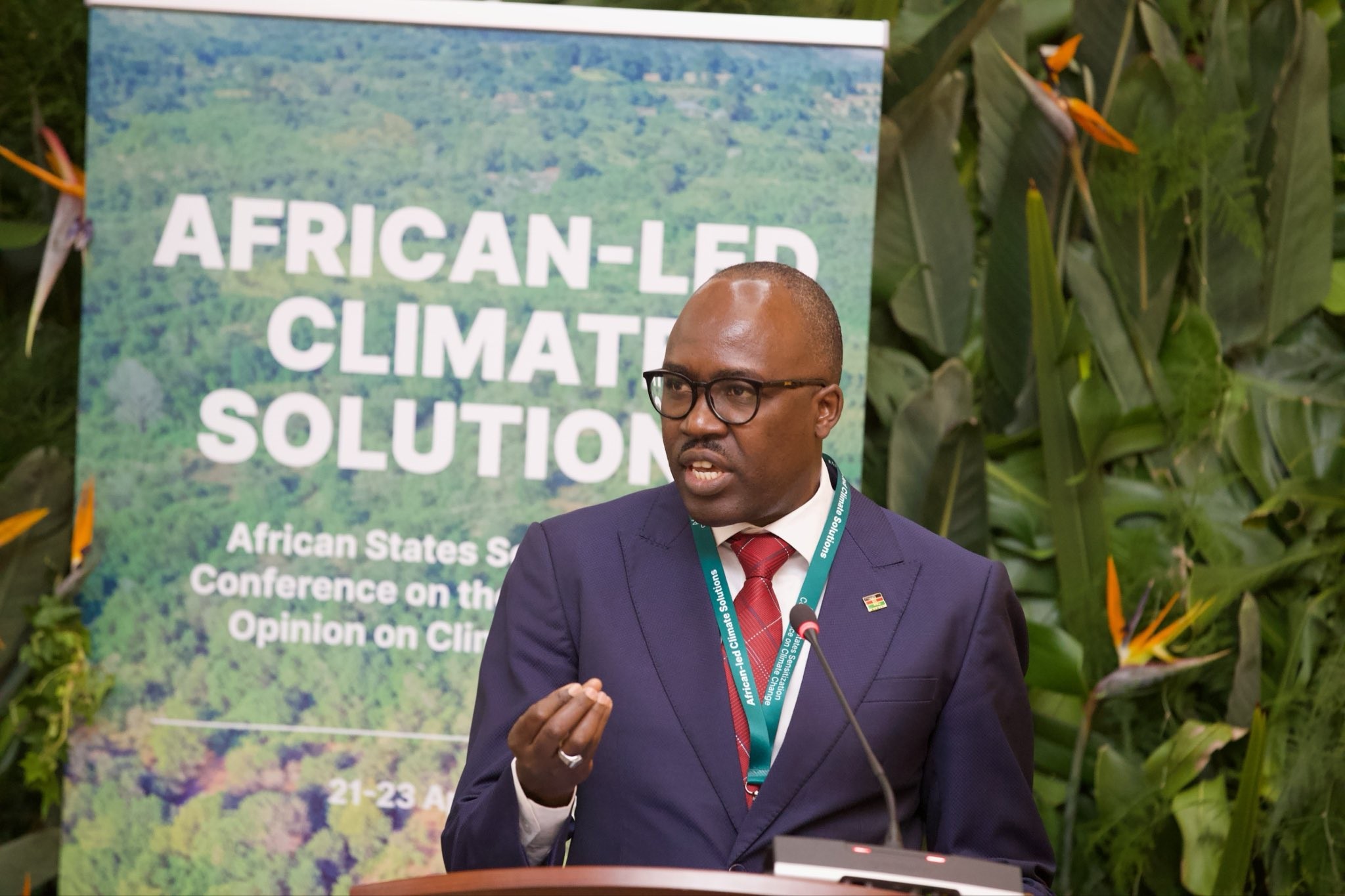

African leaders, policymakers and climate experts have urged faster, home-grown responses to the escalating effects of climate change, following a landmark advisory opinion by the International Court of Justice affirming that States have a legal duty to safeguard the climate system.
The appeal was made at a high-level sensitisation conference in Nairobi, which convened government officials, legal practitioners, scientists and civil society actors from East Africa, the Horn of Africa, alongside representatives from the African Union Commission and the United Nations and its agencies.
Participants noted that climate change continues to threaten livelihoods across the continent, with rising temperatures and prolonged droughts worsening food insecurity, while intense rainfall triggers floods that displace communities and destroy infrastructure.
They warned that without swift intervention, these impacts could erode development gains, slow economic growth, and place increasing strain on food systems, water resources and livelihoods.

The discussions were guided by the ICJ Advisory Opinion issued on July 23, 2025, which makes clear that climate commitments are no longer optional but legally binding, and that States may be held accountable for climate-related harm.
The conference was organised by the Centre for International Forestry Research and World Agroforestry in collaboration with the Government of Kenya, Queen Mary University of London, Kabarak University and the Technical University of Kenya.
It brought together senior government officials from across East Africa and the Horn of Africa, as well as representatives from the East African Community, the African Union Commission and the United Nations system, alongside international legal experts, members of the judiciary and civil society organisations.
Speaking at the forum, Principal Secretary in the State Department for Foreign Affairs Korir Sing’Oei said the ruling calls for accelerated implementation, stronger enforcement, and full integration of climate action into development and economic planning.
“This decision fundamentally shifts the landscape. Climate commitments are no longer political choices but legal obligations, and States will be held accountable,” he said.
Building on the ruling, participants called for urgent steps to translate legal momentum into practical, Africa-led solutions that benefit frontline communities, stressing that the continent should be seen not as a victim, but as a driver of solutions and accountability.
Éliane Ubalijoro, CEO of CIFOR-ICRAF, underscored that climate change is not just an environmental or legal issue, but a human and development challenge that requires coordinated action across science, law and policy to deliver tangible results for communities.